35 min read
ADHD Treatment, From Medication to Non-Medication Devices: What to Review and When
ADHD treatment is not a single medication. This piece compares four axes, medication, behavioral and psychological therapy, environmental and lifestyle support, and non-medication devices (eTNS and neurofeedback), each with its evidence status, so you can see what to review and when for your child. Written by Dr Sid Ryu, a child and adolescent psychiatrist.
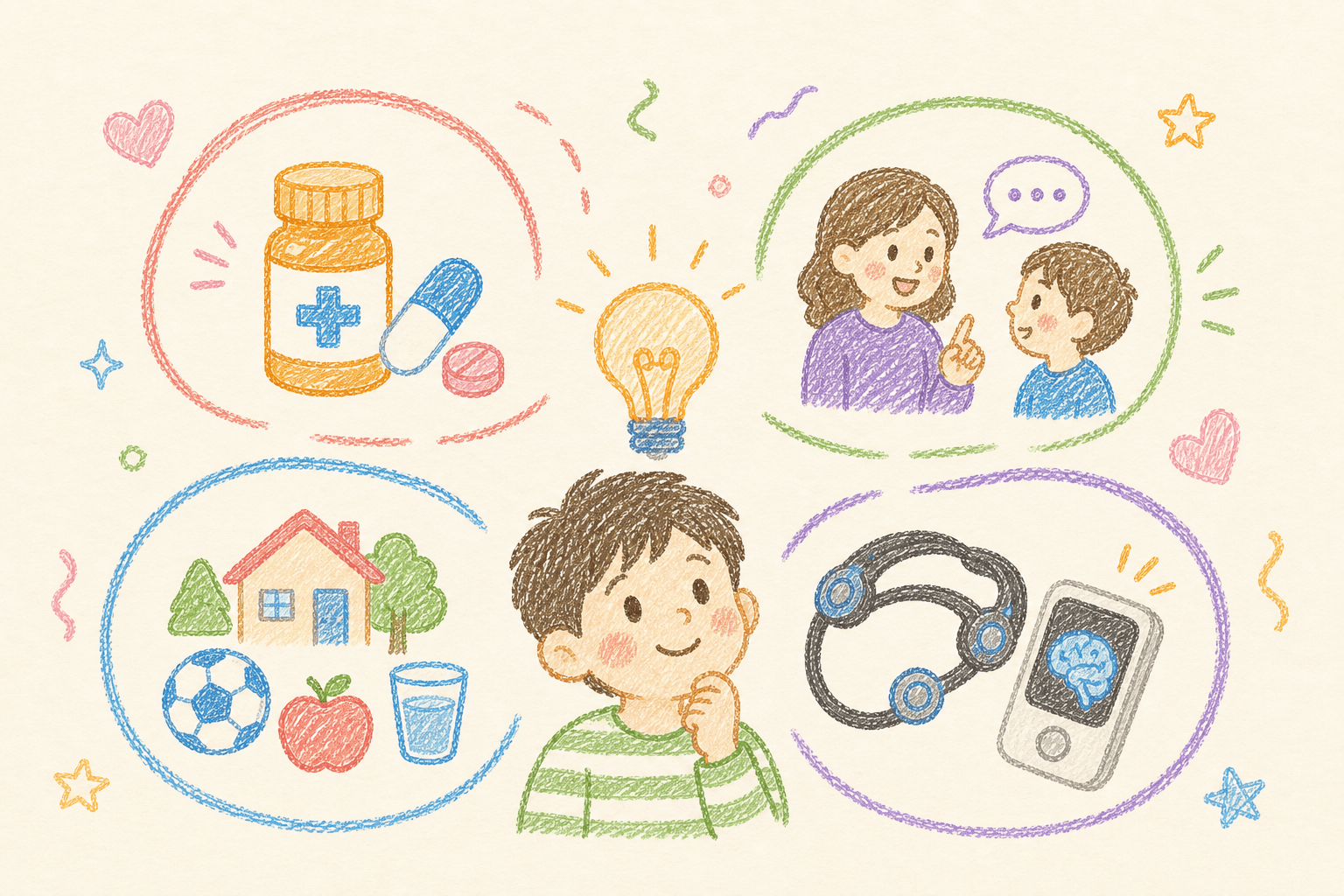
The image above is AI generated.
Key takeaways
ADHD treatment does not come down to a single medication. There are four axes: medication, behavioral and psychological therapy, environmental and lifestyle support, and non-medication neurostimulation devices. The order in which you review them shifts with the child's age and symptom severity.
Each option carries a different amount of accumulated evidence. Medication and behavioral therapy rest on thick evidence; non-medication devices span a wide range, from areas with solid evidence (FDA-cleared eTNS) to areas that call for cautious interpretation (neurofeedback). This piece sorts that difference with a label.
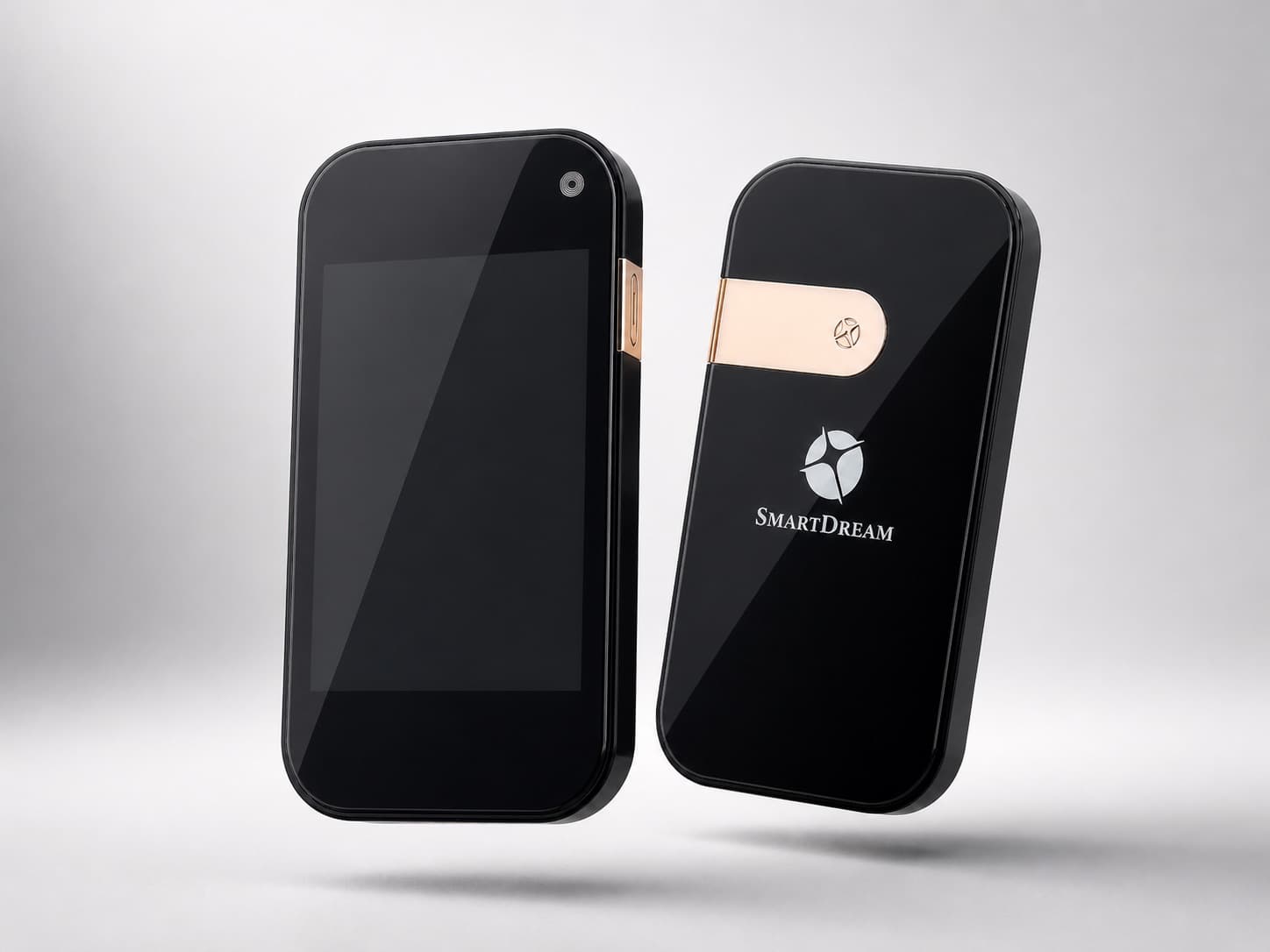
SmartDream occupies one cell on this map, a non-medication wellness device. It does not replace medication, does not diagnose or prevent ADHD, and any decision to use it should be made together with the treating physician.
This is Dr Sid Ryu, a child and adolescent psychiatrist.
Search for "ADHD treatment" and the articles split in two. One side is only about medication; the other promises a "way to recover without medication." Meeting parents in the clinic, I see how many lose their way between these two forks. Medication feels frightening, the promise of recovery without it is hard to believe, and no one lays out what sits in between.
This piece tries to fill that middle. I will draw, on a single map, what options exist for ADHD treatment, how far the evidence for each has come, and what to review first for your child. I will strip away the marketing language and speak honestly, from a clinician's standpoint.
The big picture of ADHD treatment: four axes
For parents looking into ADHD treatment for the first time, I always draw the same picture. Treatment has four axes.
Medication: stimulants (the methylphenidate class) and non-stimulants (atomoxetine and others). The first-line standard treatment for ADHD.
Behavioral and psychological therapy: parent training, cognitive behavioral therapy (CBT), school-linked intervention. The area with the longest-accumulated evidence.
Environmental and lifestyle support: sleep, exercise, eating habits, study-environment adjustments. The foundation other treatments rest on.
Non-medication neurostimulation devices: external trigeminal nerve stimulation (eTNS), neurofeedback, transcranial direct current stimulation (tDCS), and others. The newest area, and the one with the widest spread of evidence.
What matters is that these four axes are not in competition. For most children, a combination of two or three axes becomes the realistic answer. The clinical guidelines of the U.S. Centers for Disease Control and Prevention (CDC) and the American Academy of Pediatrics (AAP) also recommend combining medication and behavioral therapy as the standard for children aged 6 and over.
From here I will walk through the four axes one by one, marking each option with its evidence status. That label is the heart of this piece. Instead of declaring that something works or does not, I believe honestly showing "how much evidence has accumulated" helps parents decide.
1. Medication: first-line standard, and its limits
Evidence status: validated by decades of research, first-line in international guidelines
ADHD medication is the most-studied area, over decades. The stimulant methylphenidate (Concerta, Medikinet, Ferospin, and others) acts directly on the core symptoms of inattention and hyperactivity, and a change appears relatively quickly in many children. The non-stimulant atomoxetine (domestically While, Myungin, and others) is considered when a stimulant is not a good fit.
I do not deny that medication is the first-line standard treatment for ADHD. Used appropriately, it is safe and well-supported. Yet the reasons parents hesitate over medication in the clinic are also real.
Side effects: reduced appetite, sleep disturbance, headache, and irritability are commonly reported. Most are managed by dose adjustment, but for some children they are uncomfortable enough to affect daily life.
Burden of long-term use: ADHD often runs a chronic course, so treatment can stretch over years.
Variation in response: some children do not respond satisfactorily to first-line medication, or cannot continue it because of side effects.
There is one thing I most want to stress here. Do not stop or reduce medication on your own judgment. Even if you worry about side effects, the first step is a conversation with the treating physician. Options such as dose adjustment, switching medication, or changing the timing of doses live inside that conversation. If you are specifically worried about Concerta side effects, I cover more in 7 things to check when you worry about Concerta side effects; for differences between drug types, see stimulant versus non-stimulant and the medications prescribed in Korea.
2. Behavioral and psychological therapy: solid evidence, needs time
Evidence status: recommended in international guidelines, long research record
This is the oldest non-medication treatment with the thickest evidence. Parent Management Training, cognitive behavioral therapy (CBT), and school-linked behavioral intervention belong here. The CDC and AAP recommend behavioral therapy as first-line for preschool children (ages 4 to 6), and combining medication with behavioral therapy for ages 6 and over.
Good fit: preschool and early elementary children, cases with oppositional or conduct problems, situations needing improvement in the parent-child relationship.
Strengths: almost no side effects, and it changes the whole family's parenting environment.
Limits: it takes time to show effect, and its direct effect on inattention itself is reported to be smaller than medication.
Behavioral therapy is at its strongest alongside medication. The general view in clinical practice is that, on its own, it is often not enough for moderate or more severe ADHD.
3. Environmental and lifestyle support: not flashy, but the foundation
Evidence status: supportive, small effect on its own
Sleep hygiene, regular exercise, eating-habit adjustments, and tidying the study environment belong here. Omega-3 supplementation and limiting food additives also come up often.
It is hard to expect ADHD to improve on this axis alone. In meta-analyses, the effect size of omega-3 is reported to be very small compared with medication. Still, I never leave this axis out, because sleep deprivation or an irregular routine often makes ADHD symptoms look worse. Think of it as the floor that holds up the effect of every other treatment. If your child's sleep concerns you, I recommend reading 7 signs of insufficient sleep in children alongside this.
4. Non-medication devices: the newest area, with the widest spread of evidence
This is the area parents are most curious about and where the information is most scattered. Inside the single phrase "ADHD non-medication device," products with entirely different mechanisms and entirely different amounts of evidence are actually mixed together. Let me take them one by one.
External trigeminal nerve stimulation (eTNS)
Evidence status: FDA marketing clearance plus small-scale trials
A patch on the forehead delivers a weak microcurrent to stimulate the trigeminal nerve. In April 2019 the U.S. FDA cleared NeuroSigma's Monarch eTNS System for marketing for children aged 7 to 12 with ADHD. It is the first non-medication medical device the FDA cleared for marketing for ADHD treatment.
In a 4-week trial of 62 children with moderate to severe ADHD, the mean ADHD-RS score in the active eTNS group changed from 34.1 to 23.4, and the sham group from 33.7 to 27.5, a statistically significant difference (McGough et al., 2019). Reported adverse events included drowsiness, increased appetite, sleep problems, teeth clenching, headache, and fatigue, with no serious adverse events reported.
The FDA clearance comes with clear limits. The target is children aged 7 to 12 who are not currently taking ADHD medication, and it is classified as a prescription medical device. It has not been introduced in Korea.
Neurofeedback (EEG neurofeedback)
Evidence status: results differ across studies
A non-invasive technique that measures brain waves (EEG) and trains the child to regulate their own brain activity. Sensors are placed on the head, and the child practices self-regulation while receiving game-like feedback on brain-wave changes. Usually 20 to 40 sessions are recommended.
Side effects are rarely reported. But even where some studies report positive results, the effect size varies greatly with study design and comparison conditions, so the evidence calls for cautious interpretation. It can be worth trying, but the results relative to cost are inconsistent. For reference, neurofeedback and eTNS work differently: neurofeedback is self-regulation training of brain waves, while eTNS is neural-circuit modulation through trigeminal nerve stimulation.
Digital therapeutics (DTx)
Evidence status: FDA-cleared cases exist, limited domestic availability
A medical device in software form. The representative case is EndeavorRx, a video-game-style product the U.S. FDA authorized as a prescription treatment for ADHD in children aged 8 to 12. The child performs on-screen tasks to train attention-related cognitive functions. That said, the options for digital therapeutics usable for an ADHD indication in Korea are still limited.
Transcranial direct current stimulation (tDCS)
Evidence status: research stage, not standard treatment
A technique that passes a weak direct current across the scalp to modulate frontal-lobe activity. Research is active, but it is hard to say it has settled as a standard treatment for childhood ADHD. There is no shortage of exaggerated advertising for home devices, so I recommend approaching it especially carefully.
Non-medication devices: start by distinguishing the category
Here is a distinction parents must know. Inside the single word "device," three legal categories are mixed.
Medical device: a product cleared or approved by the Ministry of Food and Drug Safety (MFDS) for the purpose of diagnosing, treating, or preventing disease. It requires a prescription or is used only at a medical institution.
Digital therapeutic (DTx): a software medical device with medical evidence, used through a prescription.
Wellness device: a product that does not diagnose, treat, or prevent disease but supports everyday health routines. It does not go through approval and cannot replace medication.
Mixing these three makes it easy to be swayed by advertising. Even when the word "FDA" is attached, you have to check whether it is a medical-device clearance or a general wellness registration. A deeper look at the domestic ADHD wellness-device category is laid out separately in Korean ADHD wellness devices: where does SmartDream fit.
The four axes at a glance
Treatment axis | Evidence status | Onset | Side-effect burden | Good fit |
|---|---|---|---|---|
Medication | Thick (guideline first-line) | Relatively fast | Moderate | Moderate or above, fast change needed |
Behavioral/psychological | Thick (guideline-recommended) | Several months | Almost none | Preschool, family issues present |
Environmental/lifestyle | Supportive | Several months | Almost none | Basic foundation for every child |
Non-med device (eTNS) | FDA clearance + small trials | Observe 4+ weeks | Low | Med side-effects/refusal, age 7-12 not on meds |
Non-med device (neurofeedback) | Mixed across studies | Several months | Almost none | Adjunct option |
Where SmartDream sits on this map
SmartDream corresponds to a non-medication support close in principle to external trigeminal nerve stimulation (eTNS) on the map above. It is not approved as a medical device in Korea, and it has not gone through a clinical clearance process like the Monarch eTNS System.
So what evidence is there? A publicly available record observed 6-week changes in the Korean ADHD Rating Scale (K-ARS) of 41 children and adolescents aged 5 to 18 who used SmartDream in the clinic. By caregiver interview, the first positive change took an average of 3.2 weeks; 51% reported a change within 2 weeks and 73% within 4 weeks (clinical observational record). This is a clinic-based observational record, not a clinical trial for device approval. Not every child shows the same result.
So, what to review and when
With the treatment map drawn, let me note only the order of review. A single article cannot give an individual child's answer, but the broad frame I give parents in the clinic is this.
If you have not started medication yet: an accurate diagnosis comes first. Do not decide on a self-screening result alone; get a specialist's evaluation. If a self-screening placed your child in the at-risk range, the next steps are laid out by stage in the 30-day guide after a self-screening result. After diagnosis, with behavioral therapy as the base, you decide with the treating physician whether to start medication, according to age and symptom severity.
If you are on medication and the burden is heavy: I stress again, I never recommend stopping on your own. The order is to first review dose adjustment or a medication change in consultation with the treating physician. Non-medication support options can be discussed within that conversation.
If medication is not giving enough response: reviewing the diagnosis again comes first. A co-occurring condition such as anxiety, a learning disorder, or a sleep disorder may be hidden.
Whichever path, one thing is common. The decision-maker is not the family alone but the family together with the treating physician. It is enough for this piece to be the starting point of that conversation.
Frequently asked questions (FAQ)
Q. Does ADHD treatment have to start with medication?
No. It depends on age and symptom severity. For preschool children, behavioral therapy is recommended first; for ages 6 and over, when symptoms disrupt daily life, combining medication and behavioral therapy is reviewed. The starting point is not medication but an accurate diagnosis.
Q. Can a non-medication device replace medication on its own?
In mild cases it can sometimes be reviewed, but it is rare for non-medication treatment alone to be enough at moderate or above. It is realistic to approach non-medication options as "complementing or accompanying" medication rather than "replacing" it. In any case, stopping medication on your own judgment is not recommended.
Q. Can I buy an eTNS device in Korea?
The FDA-cleared Monarch eTNS System has not been introduced in Korea, and even in the U.S. it is a prescription medical device. What a Korean family can access in everyday life falls in the wellness-device category rather than a medical device, and SmartDream is one of those.
Q. Can SmartDream treat ADHD?
No. SmartDream is not a product that diagnoses or prevents ADHD. ADHD diagnosis and medication treatment must follow the care of a child and adolescent psychiatrist, and please use SmartDream only as an everyday non-medication support option.
Q. Is non-medication treatment covered by insurance?
Behavioral therapy is often covered by National Health Insurance, while neurofeedback and neurostimulation devices are currently often non-covered. It varies by device type and clinic, so check in advance.
Notes on using medical information
This piece is for general information and does not replace the diagnosis or treatment of an individual patient.
Do not stop or reduce a currently prescribed medication on your own judgment. Any medication adjustment must be decided in consultation with the treating physician.
SmartDream is a wellness device, not a medical device. It is not intended to diagnose or prevent any disease, and it does not diagnose any condition including ADHD.
External trigeminal nerve stimulation devices (such as Monarch eTNS) are prescription medical devices; whether to use them should be decided through a physician's evaluation and prescription.
Related reading
- ADHD treatment
- ADHD treatment options
- ADHD non-medication device
- non-drug neurostimulation
- eTNS
- neurofeedback
- digital therapeutics
- child and adolescent psychiatry

Dr Sid Ryu
Pediatric psychiatrist, SmartDream developer. Read more
Explore with AI
Keep reading

ADHD daily support
Quiet ADHD Symptoms: Easy-to-Miss Signs in Children and Adults, and a Self-Check Guide
ADHD daily support
High-IQ ADHD Symptoms: Why ADHD Can Be Harder to Spot in Brighter Children
ADHD daily support
Medikinet Side Effects, How It Differs from Concerta, and What Parents Should Check First