26 min read
ADHD Without Medication: A 20-Year Clinician on 4 Non-Medication Options
For parents weighing alternatives to ADHD medication, child and adolescent psychiatrist Dr. Sid Ryu reviews the current landscape of non-medication options, from behavioral therapy to non-invasive neurostimulation (eTNS). Includes FDA authorization details and clinical evidence.
Key takeaways
Medication remains the first-line standard treatment for ADHD, but more caregivers are looking at non-medication options alongside it: side effect concerns, the burden of long-term use, or insufficient response to medication.
Non-medication options fall into four broad categories: (1) behavioral and cognitive therapy, (2) neurofeedback, (3) nutrition and lifestyle interventions, and (4) non-invasive neurostimulation (eTNS).
Among these, external trigeminal nerve stimulation (eTNS, Monarch eTNS System) received FDA marketing authorization in 2019 as a prescription non-medication medical device for children ages 7 to 12 with ADHD. The FDA authorization is limited to "children who are not currently taking prescription ADHD medication."
Hello. I am Dr. Sid Ryu, a child and adolescent psychiatrist.
Over 20 years of clinical practice, one of the most common questions I hear is this:
"Doctor, does my child really have to take medication?"
Behind that question is a deep parental concern. The moment many parents receive a prescription for Concerta (methylphenidate, long-acting) or Medikinet and pick up the pill bottle at the pharmacy, they hesitate. Will appetite drop? Will growth stall? Is my child going to become "a child who has to take medication"?
I do not dispute that medication is the first-line standard treatment for ADHD. The evidence base is solid, and when used appropriately, it is a safe option. But medication is not the only answer for every parent and every child.
In this piece, I will lay out the non-medication options for ADHD that have a reasonable evidence base as of 2026. Setting marketing language aside, I will speak frankly as a clinician about which approaches may be worth considering for which children.
Why more parents are considering non-medication options alongside
The first thing to clarify is that interest in non-medication ADHD options is not simply "medication aversion." The reasons parents bring up in my office fall into four broad categories.
First, side effects. Reduced appetite, sleep disruption, headache, and irritability are commonly reported with methylphenidate-class medications. Most can be managed with dose adjustments, but for some children the impact on daily life is meaningful.
Second, the burden of long-term use. ADHD often resembles a chronic condition, and treatment frequently spans years. "Will my child be on medication throughout their growing years?" is a fair concern.
Third, some children do not respond sufficiently to medication. In clinical practice, a portion of children with ADHD do not respond well to first-line medication or struggle to stay on it due to side effects. In these cases, we reassess and consider non-medication adjuncts together.
Fourth, concern about social stigma. The phrase "taking psychiatric medication" carries weight. That burden is medically unjustified, but it exists in real life.
If any of these four reasons apply, it may be worth exploring non-medication options together with your treating physician. I do not recommend stopping medication on your own judgment.
Four non-medication options, compared
1. Behavioral and cognitive therapy
This is the oldest and most evidence-backed non-medication option. It includes Parent Management Training, school-based behavioral interventions, and Cognitive Behavioral Therapy (CBT). The US CDC and the American Academy of Pediatrics (AAP) recommend behavioral therapy as first-line for preschool-age children (ages 4 to 6), and a combination of medication and behavioral therapy for those aged 6 and older.
When it may be worth considering: preschool and early elementary children, children with co-occurring oppositional or conduct issues, families where parent-child relationships need support
Strengths: few side effects, and reports of broader benefits to the family's parenting environment
Limits: effects can take months to appear, and the direct effect on the core symptom of inattention is reported to be smaller than medication
Clinical view: it is most helpful when combined with medication. The general clinical understanding is that, on its own, behavioral therapy is often insufficient for moderate or more severe ADHD
2. EEG Neurofeedback
A non-invasive technique that trains a child to self-regulate brain activity based on EEG measurement. EEG sensors are attached to the head, and the child trains self-regulation while receiving visual feedback of brainwave changes as if playing a game. Typically 20 to 40 sessions are recommended, and both home-use headband devices and clinic-based training exist.
When it may be worth considering: children who are engaged by computer-based training, combinable with other options
Strengths: non-invasive, with few reported side effects
Limits: some studies report positive results, but effect sizes vary by study design and control conditions, so the evidence requires careful interpretation
Clinical view: it can be worth trying, but cost-to-result is inconsistent. Also, neurofeedback and external trigeminal nerve stimulation (eTNS) work through different mechanisms (neurofeedback is brainwave self-regulation training; eTNS modulates neural circuits through stimulation of the trigeminal nerve)
3. Nutrition and lifestyle interventions
Includes omega-3 fatty acid supplementation, restriction of food additives, sleep hygiene improvement, and increased physical activity.
When it may be worth considering: recommended as a foundation for all children with ADHD
Strengths: few side effects, and benefits broader health beyond ADHD
Limits: small effect as a standalone treatment. Meta-analyses report omega-3 effect sizes that are very small compared to ADHD medication
Clinical view: rather than expecting "ADHD will improve from this alone," it has meaning as a foundation that supports other treatments
4. Non-invasive neurostimulation: external trigeminal nerve stimulation (eTNS)
This is the newest area and currently the most discussed non-medication option.
A patch is applied to the forehead, delivering a mild microcurrent that stimulates the trigeminal nerve. In April 2019, the US FDA granted marketing authorization to NeuroSigma's Monarch eTNS System for children ages 7 to 12 with ADHD. This was the first non-medication medical device authorized by the FDA for marketing for ADHD treatment. The following limits are clearly stated:
Population: ages 7 to 12, children who are not currently taking prescription ADHD medication
Classification: prescription-only medical device
Use: at home during sleep, under caregiver supervision
Mechanism: the precise mechanism is not yet known, but neuroimaging studies have observed that eTNS increases activity in brain regions important for attention, emotion, and behavioral regulation
Clinical evidence (FDA-registered clinical trial): In a 4-week trial of 62 children with moderate to severe ADHD, the active eTNS group's mean ADHD-RS score changed from 34.1 to 23.4, while the sham group went from 33.7 to 27.5. This was reported as a statistically significant difference (McGough et al., 2019).
Major adverse events reported by the FDA: Drowsiness, increased appetite, sleep issues, teeth clenching, headache, and fatigue, with no serious adverse events reported. That is, the side effect burden tends to be lower than with medication, although mild adverse events related to device use can occur.
When it may be worth considering: children who cannot continue medication due to side effects, families who are not considering medication, and cases where caregivers want to review adjunctive options alongside. All decisions must be made under the evaluation of a treating physician.
Four options at a glance
Approach | Scientific evidence | Onset of effect | Cost burden | When it may be worth considering |
|---|---|---|---|---|
Behavioral and cognitive therapy | Very high | Several months | Moderate to high | Preschool age, family-context issues |
Neurofeedback | Low to moderate | Several months | High | Adjunct option |
Nutrition and lifestyle | Low | Several months | Low | Foundation for all children |
Non-invasive neurostimulation (eTNS) | Moderate to high (FDA-authorized) | Observation of 4 or more weeks recommended | Moderate | Medication side effects or refusal; children ages 7 to 12 not on prescription medication |
Where does SmartDream fit?
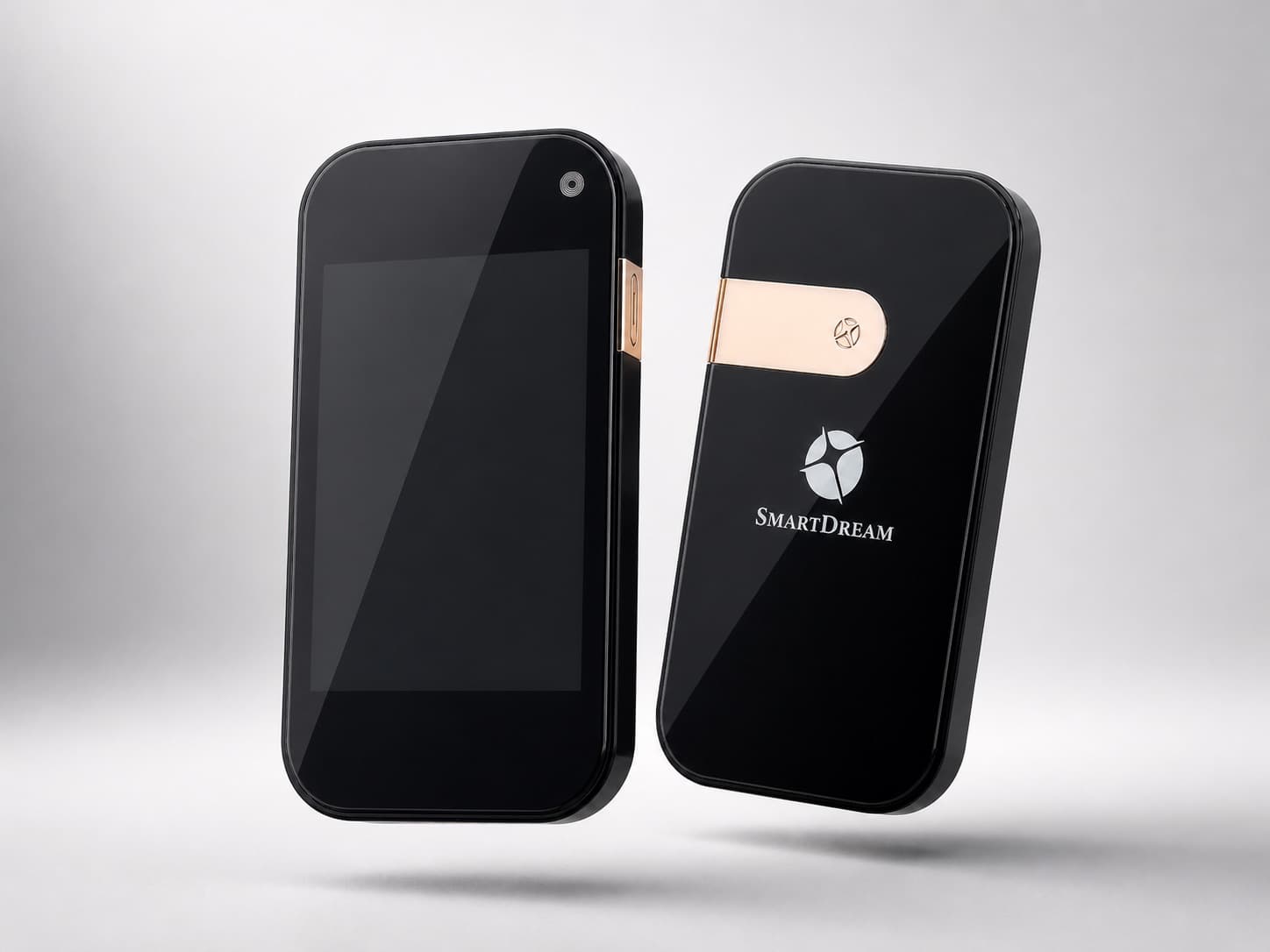
SmartDream is a microcurrent-based sleep and attention wellness device developed by Emology Inc. Among the four options above, it belongs to the category of ADHD adjunctive options grounded in the non-invasive neurostimulation (eTNS) principle. SmartDream is a wellness device that has not received medical device authorization in Korea and has not undergone the same clinical authorization pathway as the Monarch eTNS System. Not every child shows the same results, and suitability should be assessed alongside age, symptom pattern, medication response, and co-occurring conditions.
So what is right for our child?
A single article cannot answer that question. But here is the broad framework I share with parents in my office.
If medication has not been started: build behavioral therapy as the base, and decide with the treating physician whether to start medication depending on symptom severity.
If currently on medication and the burden is heavy: I never recommend stopping on your own. The first step is to consult the treating physician about dose adjustments or medication changes.
If response to medication is insufficient: the first step is to re-examine the diagnosis. Co-occurring conditions (anxiety, learning disorder, sleep disorder) may be hidden.
At every stage of considering non-medication options, the decision-maker should not be the family alone but the family and the treating physician together. The aim of this article is to provide information that can be the starting point for that conversation.
Frequently asked questions (FAQ)
Q. Can non-medication options completely replace medication for ADHD?
In mild ADHD, this may be worth considering, but in moderate or more severe cases it is rare for non-medication options alone to be sufficient. It is more realistic to approach non-medication options as "complementing or combining with" medication rather than "replacing" it. Under no circumstances do I recommend stopping medication based on self-judgment.
Q. Are there no side effects with external trigeminal nerve stimulation (eTNS)?
The adverse events reported in the FDA clinical trial were drowsiness, increased appetite, sleep issues, teeth clenching, headache, and fatigue, with no serious adverse events reported. The side effect burden tends to be lower than with medication, but saying "there are no side effects at all" is not accurate.
Q. Can eTNS be used in all children with ADHD?
The US FDA marketing authorization is limited to ages 7 to 12, children not currently on prescription ADHD medication, and prescription use. It is also recommended not to use it in patients with active implantable pacemakers or neurostimulators, patients using body-worn devices like insulin pumps, or during MRI examination.
Q. Are non-medication options covered by insurance?
Behavioral therapy is often covered by Korean National Health Insurance, while neurofeedback and neurostimulation devices are frequently non-covered. Coverage varies by device type and medical institution, so check in advance.
Q. My child is 8. Which option should we try first?
Age 8 is reported to be among the ages where behavioral therapy is most effective. At the same time, if ADHD symptoms are disrupting school life, medication or non-invasive neurostimulation can be considered alongside. Which option is right depends first on a clinical evaluation and consultation with a treating physician.
Notes on using medical information
This article is for general information and does not replace individual diagnosis or treatment.
Do not stop or reduce a currently prescribed medication on your own judgment. Any medication adjustment must be decided in consultation with the treating physician.
External trigeminal nerve stimulation devices are prescription medical devices; whether to use them must be determined through physician evaluation and prescription.
This content is not intended to guarantee or promote the effects of any specific medical device, and clinical observation results can vary by individual case.
Related reading
- ADHD 비약물 치료
- ADHD 비약물 치료 기기
- ADHD 집중력 향상 기기
- 삼차신경 자극
- eTNS
- 뉴로피드백
- 소아청소년정신과

Dr Sid Ryu
Pediatric psychiatrist, SmartDream developer. Read more
Explore with AI
Keep reading

ADHD daily support
Quiet ADHD Symptoms: Easy-to-Miss Signs in Children and Adults, and a Self-Check Guide

ADHD daily support
High-IQ ADHD Symptoms: Why ADHD Can Be Harder to Spot in Brighter Children
ADHD daily support
Medikinet Side Effects, How It Differs from Concerta, and What Parents Should Check First