29 min read
Non-Medication Care for ADHD: A Live Discussion with Prof. Kyungil Kim and Dr. Sid Ryu (Medical Channel Bee-On-Dew)
A summary of the live broadcast "Non-medication care for ADHD" on the Medical Channel Bee-On-Dew. We calmly unpack microcurrent stimulation (TNS), the fit theorist view, decluttering the home environment, praising process over outcome, the "eyeglasses" analogy for medication, and the pattern in which about 85 percent of children improve into adulthood.
Key takeaways
I joined the live broadcast "Non-medication care for ADHD" on the Medical Channel Bee-On-Dew with Prof. Kyungil Kim (Department of Psychology, Ajou University). This article distills the core of that broadcast through the lens of a clinician.
We calmly walk through new technologies such as microcurrent stimulation (TNS), the fit theorist perspective, decluttering the home environment, specific praise for process rather than results, the "eyeglasses" analogy for medication, and the pattern in which about 85 percent of children diagnosed in childhood do well without medication as adults.
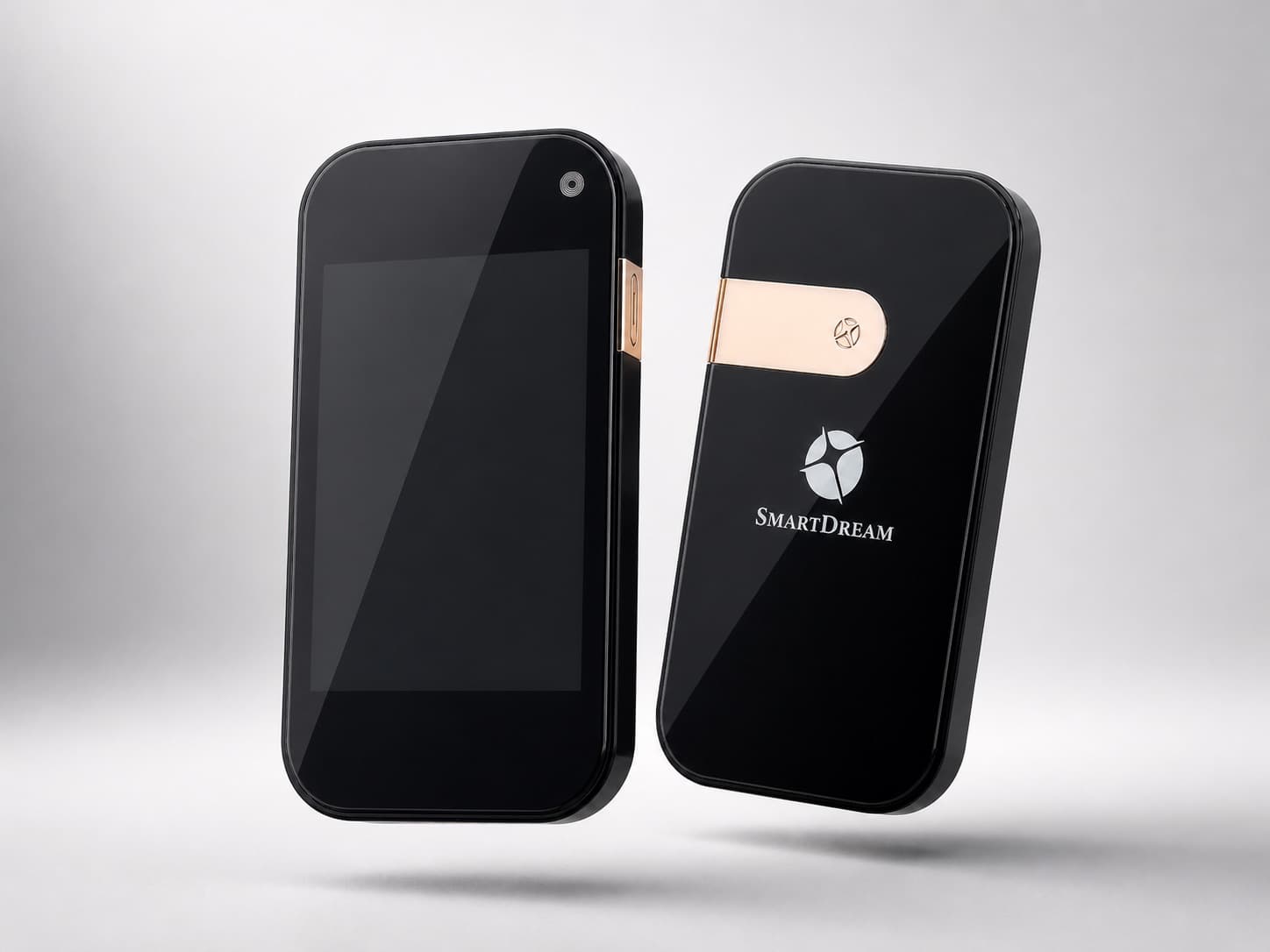
SmartDream is a wellness device, not a medical device, and it does not replace medication. Decisions about ADHD diagnosis and medication must follow the guidance of a child and adolescent psychiatrist.
After 20 years in the child and adolescent psychiatry clinic, I have noticed that the expressions on parents' faces become more serious each year when they ask about options beyond medication. I wanted to organize this current once, so in March 2021 I appeared on the live broadcast of the Medical Channel Bee-On-Dew. Together with Prof. Kyungil Kim of the Department of Psychology at Ajou University, we unpacked the topic of non-medication care for ADHD from the perspectives of a clinician and a psychologist.
The broadcast itself is long, so for readers who find it hard to watch in one sitting, I want to summarize the core of the conversation alongside my notes from the clinic. You can find the full flow and context in greater detail in the video. Almost five years have passed, but parents' questions about choices beyond medication have only grown more frequent. That is why I judged it worthwhile to revisit that conversation from where we stand today.
Options beyond medication keep growing thicker
The landscape of ADHD care is shifting quickly. Medication still has the thickest evidence base, but the menu of non-medication options sitting next to it grows every year. Digital therapeutics, VR-based training, video-game-style cognitive training, and microcurrent-based neural stimulation have branched out, widening the cards a parent can choose from.
The flow we spent the most time on in the broadcast is trigeminal nerve stimulation (TNS), which received marketing authorization from the US FDA in 2019. A small patch is placed on the forehead and a weak microcurrent flows through it, stimulating deeper brain regions (locus coeruleus, thalamus, and others) by way of the facial trigeminal nerve. The mechanism is understood to activate areas that handle selective attention and working memory.
The broadcast emphasized three characteristics.
On the safety side, decades of data have accumulated, and some opinion holds that electrical stimulation may be safer for the brain than chemical methods.
Loss of appetite, a common side effect of medication, does not appear, which is favorable for children in growth phases.
Objective indicators have also appeared, such as activation of the right frontal lobe on EEG and improvement in hyperactivity and impulsivity patterns.
That said, this device (Monarch eTNS) has not yet been officially introduced in Korea, and even in the United States it is a prescription medical device limited to children not taking ADHD prescription medication. We also noted that a prescription medical device and a daily-life support option that Korean families can access at home serve different purposes.
The fit theorist, and the lens through which we see our child
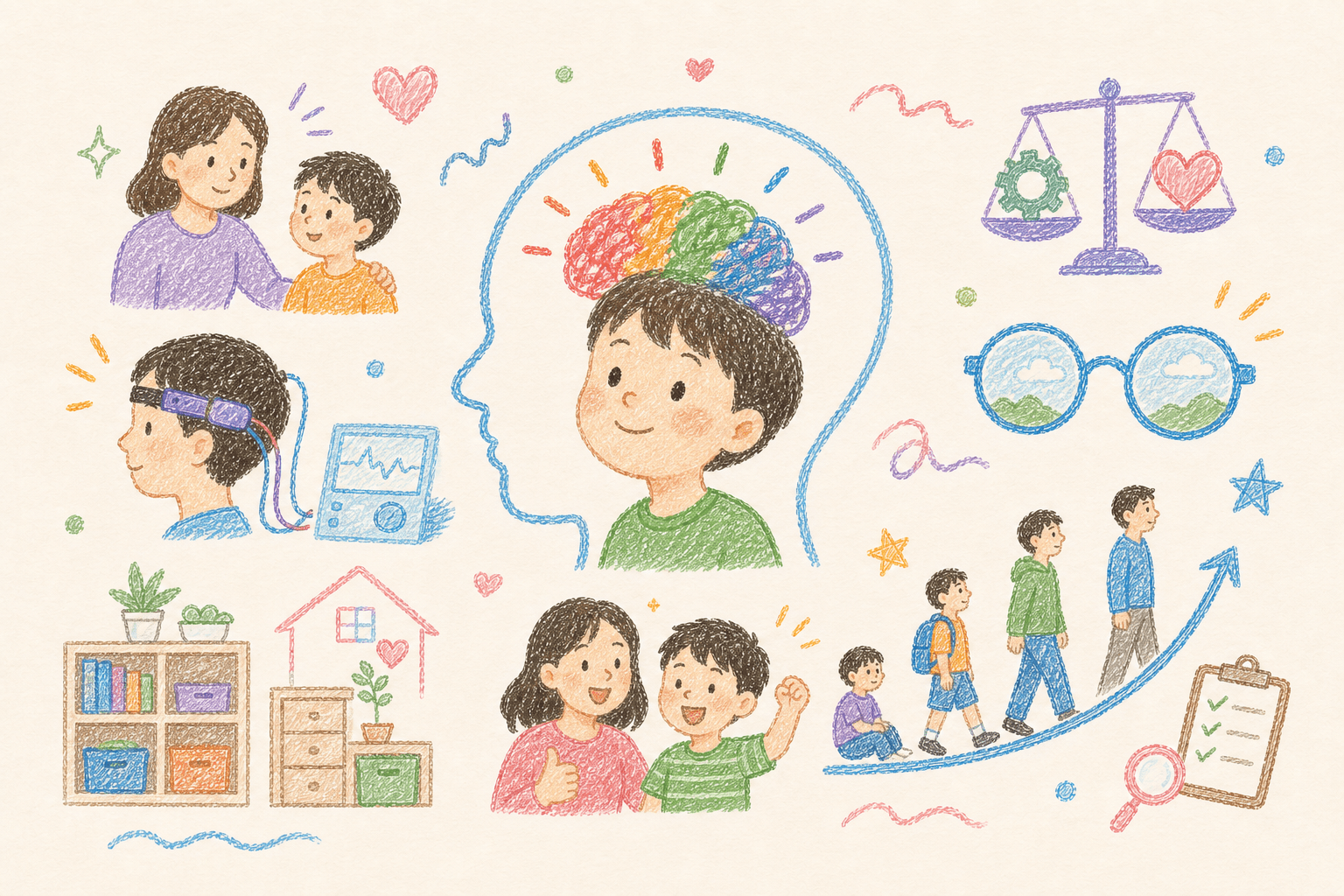
The most striking expression Prof. Kyungil Kim brought up in the broadcast was the idea of a "fit theorist." If typical children are closer to "develop theorists" who gradually adapt through many experiences, children with ADHD tendencies sit closer to "fit theorists," who struggle to focus until they meet something that fits them precisely.
This lens changes daily life at home considerably. If a child frequently quits academies, loses interest easily, and cannot stick with one thing, it is easy to bundle all those behaviors as "laziness" or "lack of willpower." The fit theorist perspective rewrites that interpretation. It shifts toward the possibility that the child simply has not yet met something that fits.
I often meet parents in the clinic who say, "I have no idea what my child actually likes." That answer usually only becomes visible after the child encounters an area where they can immerse themselves for a meaningful stretch of time. So the act of exploring through varied experiences becomes part of care itself for a child with ADHD.
The energy of effort: two to three times that of a typical child
Another point we covered together in the broadcast is that a child with ADHD spends two to three times the energy of a typical child to produce the same amount of focus. Many parents see a child who studies briefly and quickly says they are tired and feel that the child is "exaggerating." But if the brain's resource consumption itself is different, the same amount of work produces real fatigue.
In the clinic I often use this analogy. Inside the child's head, the traffic lights on the road blink frequently. A road with steady green lights lets you drive through without delay, but a road with flickering signals takes two to three times the time and effort to cover the same distance. Just having parents recognize that difference can sharply reduce the child's frustration.
Three things you can adjust at home
In the video we talked at length about parents and the home environment. There are areas the clinic cannot fully address, areas where medication does not reach, and the daily life of the family fills those gaps. I have organized them into three points.

Minimalism that reduces visual stimulation
Human concentration comes from the ability to ignore unnecessary stimulation. So in homes with a child who has ADHD, decisively organizing belongings to reduce visual stimulation often improves focus on its own. The five items spread across the desk may be quietly draining the child's brain resources at the same time.
This was a section Prof. Kyungil Kim emphasized for a long stretch during the broadcast, and a minimal environment is not expensive. The small habit of keeping only one task on the desk, accumulated over a semester, produces a different outcome.
Praising the "process" specifically rather than the result
Children with ADHD often do not see immediate outcomes after their effort. So praise centered on results tends to come back as frustration. Rather than a single phrase like "good job," pointing out something like "you just sat at the desk for 30 minutes" shapes self-esteem in a different way.
The muscle of concentration is not built through results. It builds as specific recognition of process stacks up. Prof. Kyungil Kim walked through this current in the broadcast at length, and it lines up completely with the sense I have in the clinic.
A daily life that trusts the brain's plasticity
The brain changes with environment and experience. The same is true for a child's brain and for an adult's brain. Positive conversations between parents and child, along with appropriate environmental design, change the brain just as much as electrical stimulation does, and we noted this throughout the broadcast.
Trusting plasticity means viewing today's behavior as something that reshapes the brain circuits of a month from now. Children change most often in homes that hold that view steadily.
See it as "eyeglasses," not "addiction"
One of the most common misunderstandings circulating among parents during the broadcast was "Are ADHD medications addictive?" The short answer is that at appropriate prescription doses, the kind of narcotic addiction parents commonly worry about is not reported. If anything, delaying appropriate care makes it progressively harder for the child to adapt to school life.
The analogy that comes closest when I explain this to parents is "eyeglasses." For a child with 0.3 vision, eyeglasses are not a tool that creates fake vision. They are a tool that makes a world the child cannot see well visible again. ADHD medication is a supportive tool of the same character as eyeglasses. It is a base that helps the child live up to their own ability at school, not a drug that turns the child into someone else.

Non-medication support options are cards placed next to those eyeglasses. Some children do well with the eyeglasses alone, and some children need decluttering of the environment and the parents' gaze alongside the eyeglasses.
About 85 percent do well without medication as adults
There was one thing in the broadcast I wanted to leave with parents as a kind of reassurance. Medicine does not often use the word "cure," but about 85 percent of children diagnosed with ADHD in childhood reach a state where they can do well without medication once they become adults. So the current diagnosis is not a stamp that decides the rest of life.
There is a reason this statistic comforts parents. The diagnosis is not a lifelong label, and appropriate intervention during childhood and adolescence is what decisively supports that recovery. So handling this period well leads into the freedom of the adult the child will become.
Where does SmartDream sit in this current?
The mechanism of microcurrent stimulation discussed in the broadcast falls into the same category (trigeminal nerve stimulation) as Monarch eTNS, which is authorized in the United States as a prescription medical device. SmartDream, however, is a wellness device, not a medical device, and it has not received medical device authorization from the Korean Ministry of Food and Drug Safety (MFDS). It does not diagnose, treat, or prevent any condition, including ADHD.
SmartDream's position within the flow of non-medication options discussed in the video can be summarized as follows.
Medication: The prescription option with the thickest evidence base. A physician's evaluation comes first, and this is not an area for self-judgment.
Medical devices and digital therapeutics: Authorized prescription-based non-medication options. In Korea, the choices that can be used for ADHD indications are still limited.
Wellness devices, environment, and communication: Areas families can adjust in everyday life. SmartDream and home routines sit here together.
In a clinic-based observational record of 41 children and adolescents aged 5 to 18 who used SmartDream in Dr. Sid Ryu's clinic, we tracked changes on the Korean ADHD Rating Scale (K-ARS) over six weeks. Based on parent interviews, the average time to the first positive change was 3.2 weeks. About 51 percent reported a change within two weeks and 73 percent within four weeks. We note that this record is not a clinical trial for medical device authorization but a clinic-based observational study, and not all children show the same results.
Frequently asked questions (FAQ)
Q. Are the TNS in the video and SmartDream the same product?
They sit in the same category (microcurrent-based trigeminal nerve stimulation), but they are not the same product. Monarch eTNS is a US FDA prescription medical device, and SmartDream is a wellness device used in Korea as a daily support option.
Q. Can we use SmartDream alone instead of medication?
If a child has been diagnosed with ADHD, please follow the recommendation of the treating clinician. SmartDream is a daily support option, not a replacement for medication. Do not stop or change prescribed medication on your own.
Q. How do I know if the fit theorist lens applies to our child?
A starting point is to recall the activities in which your child has stayed immersed the longest so far. What those experiences share is likely close to your child's fit. I suggest exposing the child briefly to a variety of areas while observing the pattern together.
Q. For parents who do not have time to watch the full video, what one line would you suggest?
Today, try replacing one piece of praise for an outcome with one piece of praise for the process. A month later, the look on the child's face often changes.
Q. Before watching the video, is there anything to take care of first in the clinic?
If ADHD is suspected or diagnosed, the first step is a visit to the nearest of our 12 partner clinics for an evaluation with a treating clinician. The video and this article are supplementary material that supports an appointment, not a replacement for it.
Notes on using medical information
This article is intended for general information and does not replace diagnosis or care for any individual patient.
SmartDream is a wellness device, not a medical device. It is not intended to diagnose, treat, mitigate, or prevent any disease. It does not diagnose or treat any condition, including ADHD.
Do not stop or reduce your prescribed medication on your own. Any medication adjustment must be made after consulting your treating clinician.
This article summarizes content from the live broadcast on the Medical Channel Bee-On-Dew through a clinician's lens. There may be small differences between the video and the article in interpretation.
Related reading
Is medication everything for ADHD? Four non-medication options seen by a clinician of 20 years
If your child was diagnosed with "quiet ADHD," what parents can review before deciding on medication
A lively child or ADHD symptoms? Three criteria the clinic uses to tell them apart
Dr. Sid Ryu's six-week K-ARS observational record of 41 children
- 비약물 치료
- ADHD
- 부모 가이드
- TNS
- 미세전류
- 인터뷰
- 김경일

Dr Sid Ryu
Pediatric psychiatrist, SmartDream developer. Read more
Explore with AI
Keep reading
ADHD daily support
Quiet ADHD Symptoms: Easy-to-Miss Signs in Children and Adults, and a Self-Check Guide
ADHD daily support
High-IQ ADHD Symptoms: Why ADHD Can Be Harder to Spot in Brighter Children
ADHD daily support
Medikinet Side Effects, How It Differs from Concerta, and What Parents Should Check First