28 min read
ADHD Treatment Devices: What Options Are Available in Korea?
ADHD treatment devices can be divided into neurostimulation devices (eTNS, tDCS), digital therapeutics, and wellness devices. This article explains where SmartDream fits among them.

The image above was generated by AI.
Key takeaways
“ADHD treatment devices” fall into three categories with completely different mechanisms: neurostimulation devices that stimulate nerves, software-based digital therapeutics, and wellness devices for everyday support.
SmartDream is a non-pharmacological treatment device that applies the eTNS principle, and it is an option accessible in Korea.
Hello, I’m Director Ryu Han-wook.
“Is there any way to help ADHD besides medication?” is a question many people ask. A device you stick on the forehead, foreign products that claim to train you through games, even equipment that “reads brainwaves”—many people come in with a jumble of information from ads and articles.
But when you actually try to look into it, the information is scattered and confusing. That’s because the single term “ADHD treatment device” lumps together products that differ completely in mechanism, in the amount of evidence behind them, and in whether they’re even truly usable in Korea. In this article, I’ll organize the landscape of ADHD treatment devices and summarize what products exist in Korea.
The 3 types inside “ADHD treatment devices”
First, we need to distinguish the terms. Within what people call “devices,” there are actually three different categories.
Neurostimulation devices: hardware that stimulates specific nerves or brain areas with a weak electrical current. External trigeminal nerve stimulation (eTNS) and transcranial direct current stimulation (tDCS) belong here.
Digital therapeutics (DTx): software-based medical devices. They support treatment in a game-like format.
Wellness devices: products that support everyday health routines.
External Trigeminal Nerve Stimulation (eTNS): from mechanism to evidence
Among non-pharmacological ADHD devices, eTNS is the one most worth examining closely. Its mechanism is relatively clear, and it is a non-pharmacological device that has received FDA clearance.
How it works
The trigeminal nerve is a large nerve that carries facial sensation to the brain. eTNS delivers a weak current through a patch attached to the forehead, stimulating the anterior branch of the trigeminal nerve. The resulting signals travel via the nucleus tractus solitarius in the brainstem and are transmitted to areas such as the prefrontal cortex, amygdala, and hippocampus. In ADHD, hypotheses suggest it may enhance activity in the frontal lobe and fronto-basal ganglia circuits involved in attention and impulse control, and may influence regulation of neurotransmitters such as dopamine. In fact, reports have noted increased frontal lobe activity in children whose core ADHD symptoms decreased after eTNS use.
Monarch eTNS, cleared by the FDA
In April 2019, the U.S. FDA cleared NeuroSigma’s Monarch eTNS System for children ages 7–12 with ADHD. It is the first non-pharmacological medical device cleared by the FDA for ADHD treatment. However, the conditions are clear: it is for children ages 7–12 who are not currently taking ADHD prescription medication, it is used as monotherapy, and it is a prescription-only medical device.
Let’s look at the clinical trial that supported clearance. In a randomized controlled trial at UCLA in which 62 children with moderate to severe ADHD used the device nightly for 4 weeks, the eTNS active group’s mean ADHD-RS-IV score changed from 34.1 to 23.4, while the sham group changed from 33.7 to 27.5. The between-group difference was statistically significant (p=0.005). This result was published in JAACAP in 2019. Reported adverse events—such as drowsiness, increased appetite, headache, and fatigue—were mild, and there were no serious adverse events.
How far has the evidence come?
Here’s the part we need to address honestly. eTNS has a plausible mechanism and has even received FDA clearance, but high-quality evidence in ADHD is still limited. A 2024 systematic review summarizing neurological and psychiatric applications of eTNS found that ADHD research totaled about 86 participants: one open-label single-arm trial (24 people) plus one double-blind randomized controlled trial (the 62-person study above). In other words, there is effectively only one double-blind RCT supporting efficacy. The authors also concluded that while 4 weeks of eTNS reduced core ADHD symptoms, the evidence is limited because there is only a single double-blind RCT. They also noted the issue of symptoms returning after stimulation is stopped. Larger RCTs are currently underway in the UK and elsewhere.
Transcranial Direct Current Stimulation (tDCS)
Another neurostimulation approach is tDCS. It aims to modulate frontal lobe activity by delivering a weak direct current through the scalp. Research is active, but it would be difficult to say it has become a standard treatment for pediatric ADHD.
Digital therapeutics (DTx): training through games
This is the area that has drawn the most attention. In June 2020, the U.S. FDA cleared Akili’s EndeavorRx as a prescription video game to improve attention in children ages 8–12 with ADHD. It was the first digital therapeutic delivered in a game format via prescription, supported by five studies involving 600 children. In December 2023, the indicated age range was expanded to include ages 13–17.
In June 2024, the adult product EndeavorOTC received FDA clearance. It is the first over-the-counter (OTC) digital therapeutic for adult ADHD. In a clinical study where 221 adults used it for 6 weeks, 83% of participants reported improved focus based on the attention control index of the attention test (TOVA).
Neurofeedback
This is a non-invasive technique that measures brainwaves (EEG) and trains children to regulate their own brain activity. Sensors are placed on the head, and users practice self-regulation by receiving game-like feedback based on EEG changes. Typically, 20–40 sessions are recommended.
Side effects are minimal, but caution is needed when interpreting effectiveness. A 2025 meta-analysis pooling 38 randomized controlled trials (2,472 participants) found no significant improvement in overall ADHD symptoms when outcomes were assessed by blinded raters who did not know treatment assignment. In contrast, a 2024 network meta-analysis focusing on children found that many neurofeedback approaches outperformed sham, but the effect size depended heavily on which rating tools were used. Taken together, the pattern suggests that effects look larger when evaluators know whether treatment was given, but diminish under rigorous blinding. My honest view is that it can be tried, but results are not consistent relative to the cost. For reference, neurofeedback is EEG self-regulation training, whereas eTNS directly stimulates the trigeminal nerve—so their mechanisms differ.
ADHD treatment devices worth considering in Korea
This is the core of this article. The FDA-cleared devices discussed so far (Monarch eTNS, EndeavorRx) have not been introduced in Korea. So what can Korean families realistically access?
Korea established a framework for approval and management of digital therapeutics by implementing the Digital Medical Products Act on January 24, 2025. And digital therapeutics with ADHD as an indication have also emerged. StarRuckus, developed by Emotiv, was designated an innovative medical device in August 2024 and then received digital medical device certification under the Digital Medical Products Act in November 2025. It is the first digital therapeutic case under the Act, combining game-based cognitive training with AI analytics, and it is reported to have shown symptom improvement comparable to medication (atomoxetine) in confirmatory clinical trials at Seoul National University Hospital and Hanyang University Hospital.
Where does SmartDream fit?
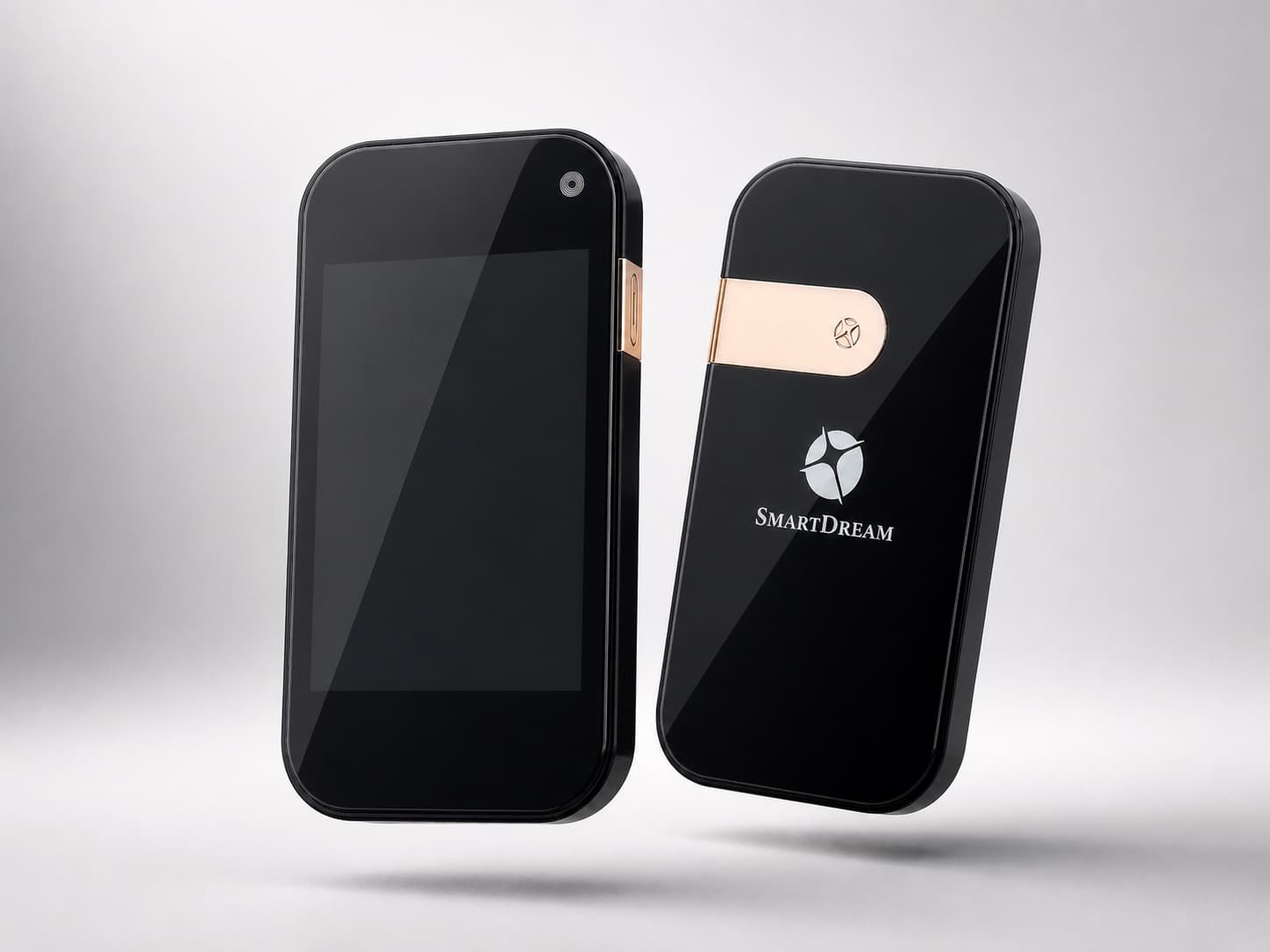
SmartDream is a non-pharmacological treatment device that applies the external trigeminal nerve stimulation (eTNS) principle within the classification above. It implements the trigeminal nerve stimulation approach described earlier in a form that can be used at home, unlike Monarch, which is a prescription medical device. However, one point should be made clear: SmartDream has not gone through FDA or MFDS medical device approval procedures for an ADHD indication like Monarch eTNS. It is often classified as a wellness device.
Here is a summary of observational records from a group that used SmartDream. In a clinic setting, changes in the Korean ADHD Rating Scale (K-ARS) were followed for 6 weeks in 41 children and adolescents ages 5–18 using SmartDream. Among 38 participants overall, the mean K-ARS score decreased from 17.95 to 15.58 (scores decreased in 66%); the average time to the first positive change based on parent interviews was 3.2 weeks, with 51% reporting a change within 2 weeks and 73% within 4 weeks. Among 26 who used medication concurrently, 39% reduced their medication dose over the 6 weeks.
To describe SmartDream accurately, it is best viewed as an adjunct option to consider alongside medication and behavioral therapy.
4 things parents should check when choosing a device
To avoid being swayed by advertising, I recommend checking the following.
Which category it belongs to: Distinguish whether it’s a prescription medical device, a digital therapeutic, or a non-pharmacological device for everyday support. Even if it says “FDA,” you should check which country and what class of clearance it refers to.
Whether the source of evidence is clear: See whether claims of effectiveness cite sources such as clinical trials or conference materials, or whether they rely only on testimonials.
Whether it promises to replace medication: Be skeptical of products that definitively claim you can “stop medication.” The more robust the evidence behind a device, the more it emphasizes combination use rather than medication replacement.
Whether you consulted the primary physician: For any device, it is safest to make the decision together with the physician who made the diagnosis.
Frequently asked questions (FAQ)
Q. Can I buy an eTNS device in Korea?
The FDA-cleared Monarch eTNS has not been introduced in Korea, and it is a prescription medical device even in the U.S. However, non-pharmacological devices that apply the eTNS principle can be accessed in Korea, and SmartDream is one of them. You should also be aware that this category is separate from medical device approval procedures.
Q. Can I stop medication with an ADHD treatment device?
No. The more robust the evidence behind a device, the more it is intended for combination use rather than medication replacement. In any case, do not stop medication on your own—please consult your primary physician.
Q. Does neurofeedback work?
Results vary across studies. In particular, effects become weaker in blinded studies where evaluators do not know whether treatment was given. Side effects are minimal, but because cost-effectiveness is inconsistent, a realistic approach is to treat it as an adjunct option used alongside other treatments—even if you try it.
Q. Can SmartDream treat ADHD?
SmartDream is not a product that diagnoses or prevents ADHD. For ADHD diagnosis and medication treatment, you must follow care from a child and adolescent psychiatrist, and please use SmartDream as a non-pharmacological adjunct option to consider alongside medication and behavioral therapy.
Precautions when using medical information
This article is for general informational purposes and does not replace diagnosis or treatment for individual patients.
The regulatory and clinical information in the text is based on publicly available primary sources; for the latest approval status of each product, please check the Ministry of Food and Drug Safety and the manufacturer’s information.
Do not stop or reduce prescribed medication based on your own judgment. Medication adjustments should be decided only after consulting your primary physician.
References
FDA, "FDA permits marketing of first medical device for treatment of ADHD" (2019)
McGough JJ et al. (2019), Trigeminal Nerve Stimulation for ADHD, JAACAP
Systematic review and meta-analysis of eTNS clinical and cognitive effects (2024)
Review of eTNS mechanisms and applications, Frontiers in Neurology (2025)
Ministry of Food and Drug Safety, guide to digital therapeutics
Director Ryu Han-wook’s 6-week K-ARS observational record (41 participants)
Recommended related resources
- ADHD 치료기기
- ADHD 비약물 치료기기
- eTNS
- 삼차신경자극
- 디지털 치료기기
- EndeavorRx
- 뉴로피드백
- SmartDream

류한욱 원장
Pediatric psychiatrist, SmartDream developer. Read more
Explore with AI
Keep reading

ADHD daily support
Quiet ADHD Symptoms: Easy-to-Miss Signs in Children and Adults, and a Self-Check Guide

ADHD daily support
High-IQ ADHD Symptoms: Why ADHD Can Be Harder to Spot in Brighter Children
ADHD daily support
Medikinet Side Effects, How It Differs from Concerta, and What Parents Should Check First